
Health Proactivity Index
- Younger adults are more proactive about their health, placing them in an excellent position to foster long-term wellbeing
- Most UK adults still take a reactive approach to their health rather than preventing issues early
- Health proactivity is more connected to tech use, rather than family health history
Family history doesn’t translate into a higher proactivity score
Most UK adults (55%) score between 26 and 50 in the proactivity index, making them more reactive than proactive with their health. Just under a quarter (23%) score 25 or less (very reactive), while one in five (20%) score between 51 and 75, making them proactive with their health. Only a small percentage (2%) scores over 76 in the index.
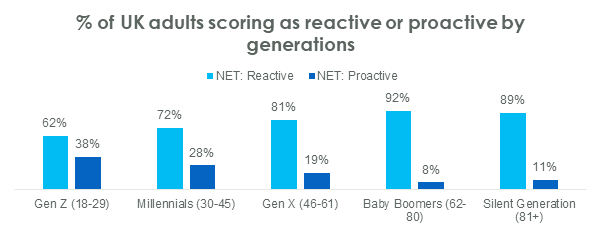
Younger generations tend to be more proactive with their health (38% Gen Z and 28% Millennials) compared to Baby Boomers (8%), potentially as a way to achieve better long-term wellbeing. Overall, Gen Z have the highest proactivity score (44.1) in the sample. However, this could also reflect the easier access younger generations have to gadgets that can actively monitor their health.
Interestingly, having a family history of illness doesn’t result in higher proactivity scores in UK adults; on the contrary, those who are proactive are more likely to say they don’t have conditions in their family history. This suggests that a family history is not a strong reason to monitor health more closely; perhaps those without known conditions in their immediate family are being more proactive because they don’t know what to expect in their future.
Proactive UK adults are more likely to be interested in healthcare tech
It’s possible the younger age is a contributing factor, but UK adults with a higher proactivity score are more likely to use and be excited by healthcare tech.
Seven in ten (70%) of proactive adults say they use AI chatbots for health-related reasons, compared to just 26% of reactive adults. The most popular ways to use chatbots among those in the proactive segment include: as a symptom checker before contacting a healthcare professional (25%), as a first port of call when they are unsure about a health issue before searching for information elsewhere (23%), to stay informed about emerging health risks that could affect them (23%), or for personalised, preventative healthcare advice (22%).
While most UK adults tend to be wary of emerging healthcare technologies, those in the proactive segment are significantly more excited than average, especially when it comes to personalised treatments based on someone’s DNA (47%).
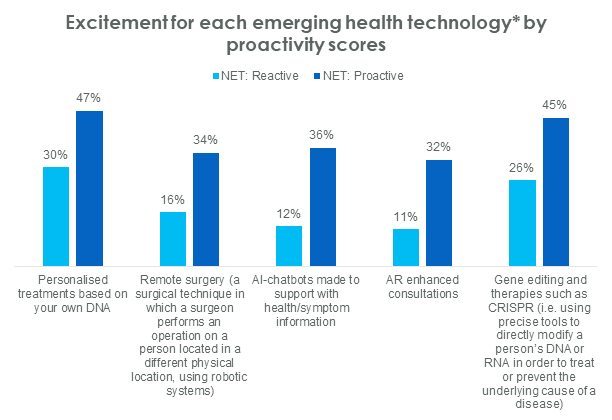
*Answer options were not provided further definition and thus responses are influenced by respondents own understanding.
What does this mean for communicating with the public about their health?
Overall, brands should be mindful of whether their intended audience is likely to be more proactive or reactive.
- Healthcare tech brands, for example, are more likely to resonate with a proactive audience who are already really interested in health tech, so a focus on prevention and long-term benefits is more likely to be successful.
- A day-to-day wellness product, on the other hand, should assume most of its audience is reactive since most of the UK is, and make their messaging revolve around short-term benefits and convenience.
Methodology
Between January 27th to 30th 2026, Opinium ran a survey among a nationally representative sample of 2,000 UK adults (18+). These results were used to calculate the Health Proactivity Index for the UK population, with scores ranging between 0 to 100.
21 respondents were excluded from the index calculation, as they did not consent to share medical and health related information.
The index shows how proactive or reactive UK adults are in managing their health, including:
- How often they monitor aspects like blood pressure, steps, sleep cycles, etc;
- How often they engage in behaviours that promote better health in the long run, like exercise or eating a healthy meal;
- How soon they book an appointment with a healthcare professional after the appearance of new or concerning symptoms;
- How willing or unwilling would they be to have optional health treatments and tests, like seasonal vaccinations or full-body scans.
The higher the score, the higher the proactivity. Based on their scores, the respondents were classified as Very Reactive (0 to 25), Reactive (26 to 50), Proactive (51 to 75), and Very Proactive (76 to 100). Overall, the UK population can be considered reactive when it comes to their health, with an index score of just 37.5/100.