
Health Proactivity Index – Wellness Products

Wellness Products
- Health is a priority for most UK adults, but fewer than half feel they can afford products that support it
- Cost remains a major barrier to wellbeing, even among health-conscious consumers
- Consumers increasingly value evidence-backed wellness, but price continues to shape purchasing decisions
Less than half feel they can afford products that improve their health
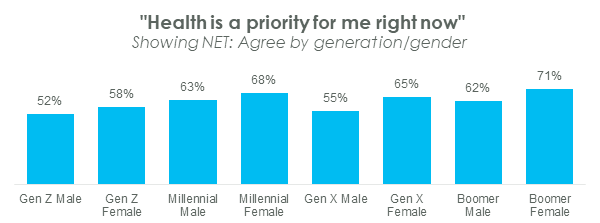
Health is a priority for most UK adults, with 63% agreeing that it is important to them. Even among reactive adults, over three in five identify health as a priority (61%), although understandably this is higher among proactive respondents (71%). Priority rises to 66% among women and 67% among Boomers, reaching 71% among Boomer women compared with 55% of Gen Z.
However, strong interest in health does not always translate into spending power. Fewer than half (46%) believe they can afford products that improve their health, including 42% reactive respondents. This highlights a clear challenge where many consumers want to invest in their health but feel constrained by cost. While proactive Brits may be more open to premium solutions, other groups may need more affordable options and stronger evidence of value.
When looking back, many Brits wish they had taken earlier action to support their health. Common regrets include not maintaining a healthy weight, exercising regularly, cutting back on alcohol or smoking, and delaying medical or dental care. Many said financial pressures or family responsibilities made it difficult to prioritise their own wellbeing at the time.
These reflections highlight an opportunity for wellness brands. Many understand the value of prevention but feel they lacked the support or guidance to act sooner. Brands that help people build healthy habits early may be well placed to turn hindsight into action.
Over half would pay more for wellness brands with scientific evidence
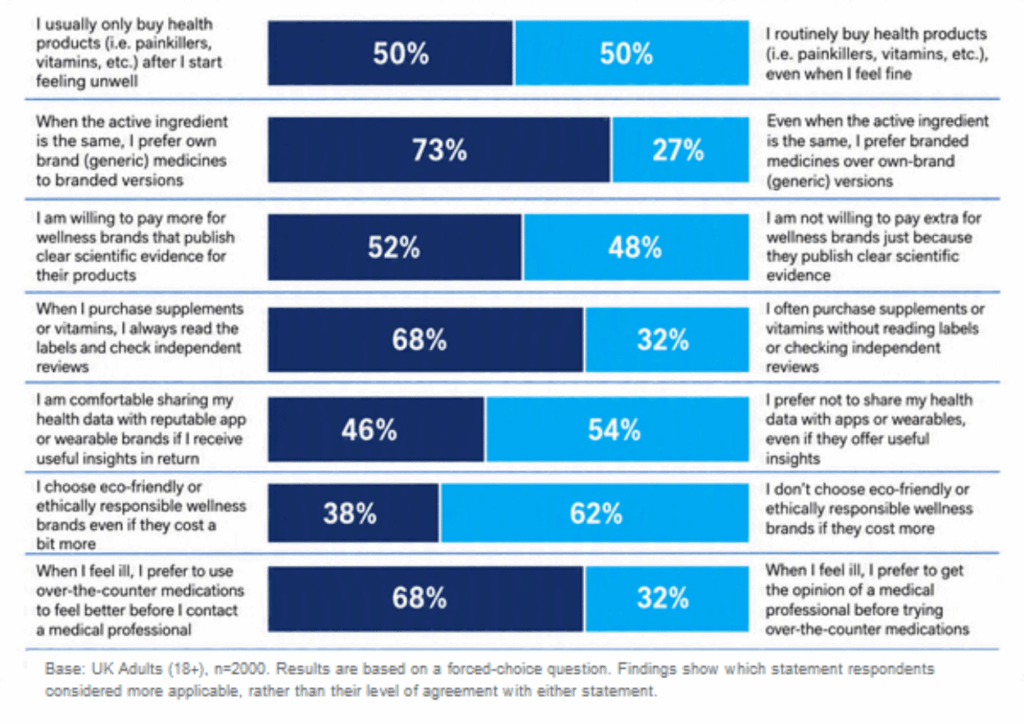
Half of UK adults (50%) regularly buy health products such as vitamins and supplements, even when they are feeling well. However, Brits remain selective about paying a premium. While 38% choose eco-friendly or ethical wellness brands despite the higher cost, 73% prefer own-brand products when the active ingredients are the same.
Scientific evidence can help justify higher prices. Just over half (52%) say they would pay more for wellness brands that publish clear scientific evidence, rising to 67% among proactive Brits, while 48% would not. UK adults are also actively checking product claims. Over two-thirds (68%) routinely read labels or look at independent reviews, interestingly with no difference in approach between proactive and reactive individuals.
Overall, the findings suggest that evidence and transparency matter, but affordability remains a key factor in purchasing decisions, especially among reactive Brits. On the other hand, UK adults with a proactive score are significantly more likely to pay over the odds for brands that are eco-friendly or supported by scientific evidence.
Percentage who selected which applies the best to them
Health tracking focuses on day-to-day wellbeing
UK adults are far more likely to monitor everyday measures of health than longer-term clinical indicators. Steps are the most commonly tracked metric, with 44% monitoring them at least weekly, including 21% daily. This is followed by weight (42%) and sleep (33%).
In comparison, just 16% track cholesterol weekly and 15% track hormone levels. Many do not monitor these measures at all, particularly hormone levels (70%), cholesterol (54%), stress (54%) and calorie intake (50%). This suggests that health tracking is largely focused on visible, immediate aspects of wellbeing rather than longer-term health indicators.
Views on sharing health data are mixed. Almost half (46%) are comfortable sharing health data with reputable companies in exchange for useful insights, while 54% are not.
Proactivity is the strongest driver of willingness to share data. Nearly two-thirds (63%) of proactive adults are comfortable doing so, compared with 42% of reactive Brits. Age is also important: Gen Z are the most open to sharing health data (63%), followed by Millennials (52%). This falls to 34% among Boomers and 26% among the Silent Generation.
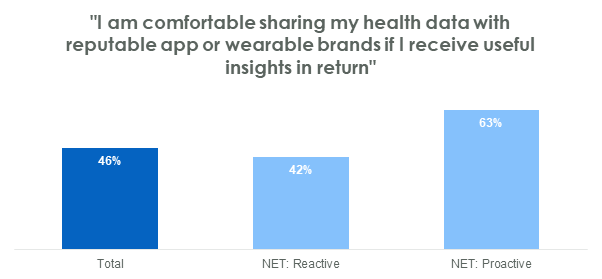
For wellness brands, this points to strong opportunities among younger and more proactive consumers, who are more receptive to personalised and data-driven experiences. More cautious consumers may need greater reassurance around privacy, security and the value they receive in return for sharing their information.
Methodology
Between January 27th to 30th 2026, Opinium ran a survey among a nationally representative sample of 2,000 UK adults (18+). These results were used to calculate the Health Proactivity Index for the UK population, with scores ranging between 0 to 100.
21 respondents were excluded from the index calculation, as they did not consent to share medical and health related information.
The index shows how proactive or reactive UK adults are in managing their health, including:
- How often they monitor aspects like blood pressure, steps, sleep cycles, etc;
- How often they engage in behaviours that promote better health in the long run, like exercise or eating a healthy meal;
- How soon they book an appointment with a healthcare professional after the appearance of new or concerning symptoms;
- How willing or unwilling would they be to have optional health treatments and tests, like seasonal vaccinations or full-body scans.
The higher the score, the higher the proactivity. Based on their scores, the respondents were classified as Very Reactive (0 to 25), Reactive (26 to 50), Proactive (51 to 75), and Very Proactive (76 to 100). Overall, the UK population can be considered reactive when it comes to their health, with an index score of just 37.5/100