

Medical Misinformation

Confidence levels for identifying trustworthy information
Confidence among UK adults in recognising accurate health information is far from universal. Just over half of Brits feel confident in their ability to identify trustworthy medical information across a range of topics, leaving nearly half of the population uncertain about whether the advice they encounter is reliable. This gap is significant because it suggests that misinformation can easily exploit areas where people feel less equipped to judge credibility.
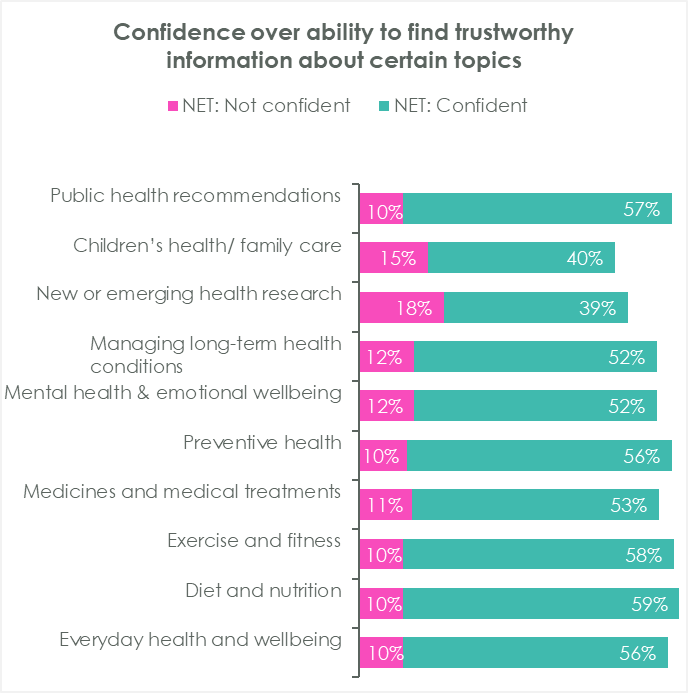
Confidence is not consistent across all health topics. It peaks in certain areas, such as exercise and fitness, where 58% of Brits report feeling confident. Everyday health routines and lifestyle advice are perceived as easier to verify; in contrast, confidence drops sharply when the subject matter becomes more complex or specialised. The lowest confidence levels are seen in new or emerging health research, where less than two in five (39%) feel assured in their ability to identify accurate information.
NHS/ Government websites, GPs and family doctors were reported to be the most popular sources of medical information
NHS/government health websites were reported as the dominant source of medical information, used by over half of all Brits (53%). This reliance is even stronger among women (57% vs. 49% for men), suggesting a preference for official, trusted sources. General Practitioners are the second most common source at 43%, with no gender difference.
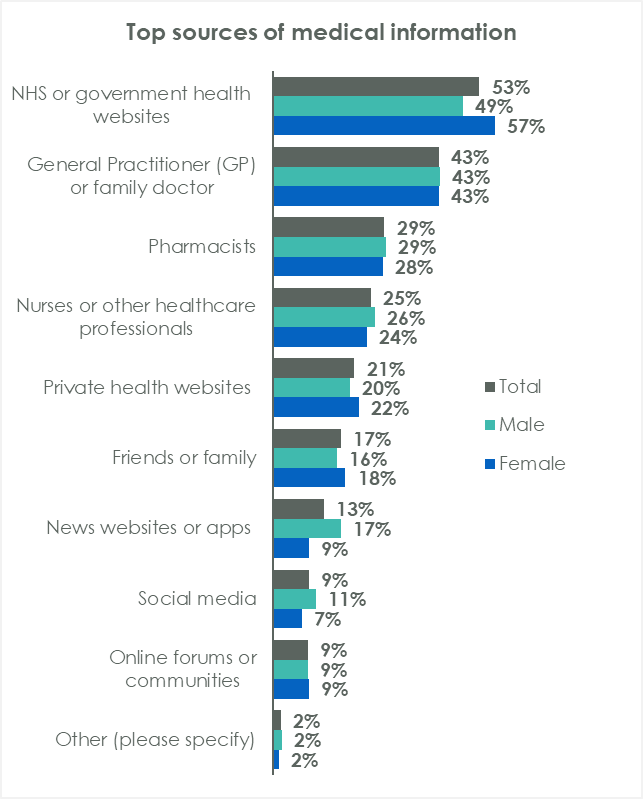
Pharmacists (29%) and nurses (25%) form a secondary tier, while private health websites are trusted by around one in five (21%). Informal channels such as friends/family (17%) and news sites (13%) are far less common, and social platforms barely register (9%). Overall, the pattern shows a clear preference for authoritative, evidence-based sources, with less reported reliance on social or peer-to-peer channels.
Lack of scientific evidence and sensationalism are the biggest reasons for loss in trust
Trust in health information can be fragile, and certain warning signs undermine credibility. The most significant barrier identified by Brits is the absence of scientific evidence, where around one in three (29%) said that they lose trust when information is not backed by scientific information.
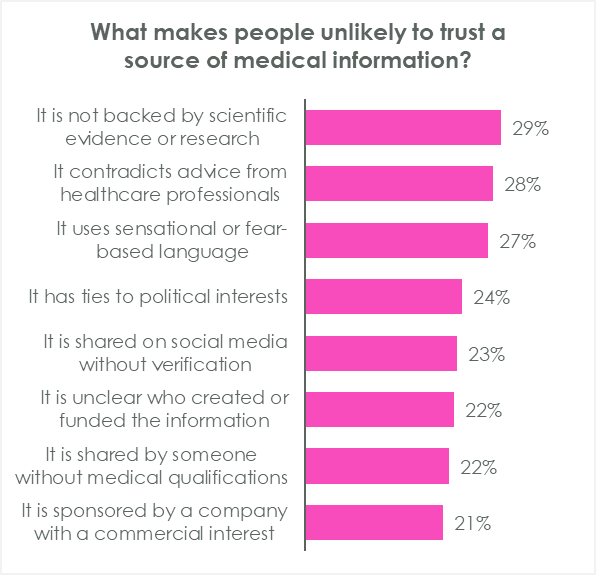
Another major trust breaker is inconsistency with professional guidance. 28% of UK adults report that they distrust information that contradicts advice from healthcare professionals such as GPs, pharmacists, or nurses. This is especially important because, as highlighted in the previous findings, a significant proportion of people actively seek guidance from these professionals as their primary and most trusted sources of medical information
Language also plays a critical role in shaping perceptions of trustworthiness. Over a quarter of UK adults (27%) view sensational or fear-based language as a warning sign. Dramatic headlines and alarmist tone are often associated with bias or clickbait rather than credible health advice. To maintain authority, health communications should adopt a clear, balanced, and factual tone that informs rather than provokes anxiety.
Finally, social media emerges as a significant risk factor for trust erosion. Almost one in four Brits (23%) say they distrust health information shared on social platforms without verification. Unverified posts can spread rapidly, amplifying misinformation and damaging confidence in legitimate sources. This finding reinforces the need for robust fact checking, transparency, and the inclusion of authoritative links, such as NHS or GP resources, when sharing health content on social channels.
For more insights with impact get in touch with Alex Chace (alexchace@opinium.com).