


Ed Davey at five years – the Lib Dems’ quiet strength
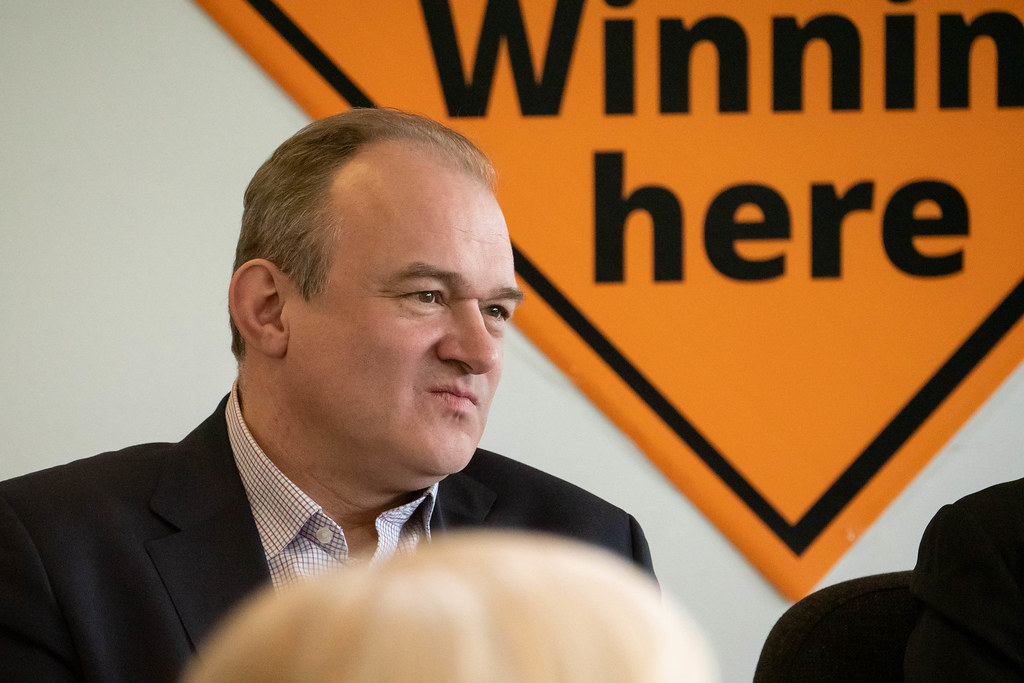
Maybe Sir Ed’s leadership is precisely what the Liberal Democrats need, suggests James Crouch
As originally seen in Lansons-Opinium Political Capital. See the original data tables on perceptions of the Lib Dems as a party here.
Ed Davey has now been leader of the Liberal Democrats for just over five years. At first glance, it might feel odd that Davey, who is rarely the headline act, is now the longest-serving Lib Dem leader since Nick Clegg.
Party conferences are always a moment for stock-taking. The party’s performance in 2024, their best in terms of seats since before the Second World War, should have secured them a louder voice in Westminster. Yet, for all their success, the Liberal Democrats still seem to punch below their weight in terms of media presence and political profile.
Critics sometimes ask: what have they done with those 72 seats? The answer may lie in Ed Davey’s distinctive approach to leadership. Rather than trying to act like a government-in-waiting, he has deliberately steered the party toward a niche that feels safe, calm, and locally rooted. That strategy may not be glamorous, but it is keeping the party’s gains secure for now.
In some ways, Davey is one of the most popular party leaders in British politics today. Crucially, this isn’t because he commands widespread enthusiasm, but because he provokes very little hostility. Recent polling shows his net approval rating hovering at around net -2, with 21% approving of his leadership and 23% disapproving – but a striking 38% say they “neither approve nor disapprove,” and another 18% admit they don’t know. In other words, Davey is a political figure with remarkably little profile, but also remarkably little baggage.
The key is that he keeps Lib Dem voters onside. Among those who backed the party in 2024, his net approval rating stands at +50 (58% approve, just 8% disapprove). This suggests that, within the Lib Dem family at least, there is no appetite for a change in direction.
Electorally, the party is holding steady. They are polling at roughly 13%, almost exactly what they achieved at the general election. For a party that has historically tended to underperform in midterm polling, this is a healthy sign. Their vote has not eroded, and the party remains resilient despite its low profile.
Part of that resilience comes from the public perception of the Liberal Democrats as calm, decent, and well-meaning. Polling shows that voters see the party as tolerant (net score of +15), united (+14), and acting in the national interest (+9). Davey’s mild, sometimes jokey persona has reinforced this image. He’s made the party feel approachable and, crucially, unthreatening. In a time when much of British politics is dominated by polarisation and division, there is something quietly appealing about a party that simply seems nice.
But there are limits to this strategy. The public remains sceptical about whether the Liberal Democrats are ready for government (net -25), whether they truly represent most people’s views (net -15), or whether they can be trusted to take big decisions (net -13). Ed Davey is not about to launch a serious bid for Number 10 on the back of these numbers. But in the context of all of the other major parties struggling on these indicators more than ever, their positives position the Lib Dems pretty well with their target voter.
So it appears his steady hand has helped the Lib Dems carve out a rare position in British politics: “how bad could it be being represented by a Lib Dem?”. In a climate where trust is scarce and electoral volatility is the story of recent years, that is the Liberal Democrats’ most powerful asset.